
RadioFloppy Current project
A WiFi floppy drive emulator for the Atari ST, built around an ESP32-S3
on a custom carrier PCB and housed in a repurposed Gotek enclosure. It
takes over drive B: and plays .ST and HFE disk images straight from a
micro SD card — no cables to a PC, no flashing images over USB first: just
pick a game from a web page on your phone or laptop and it's mounted.
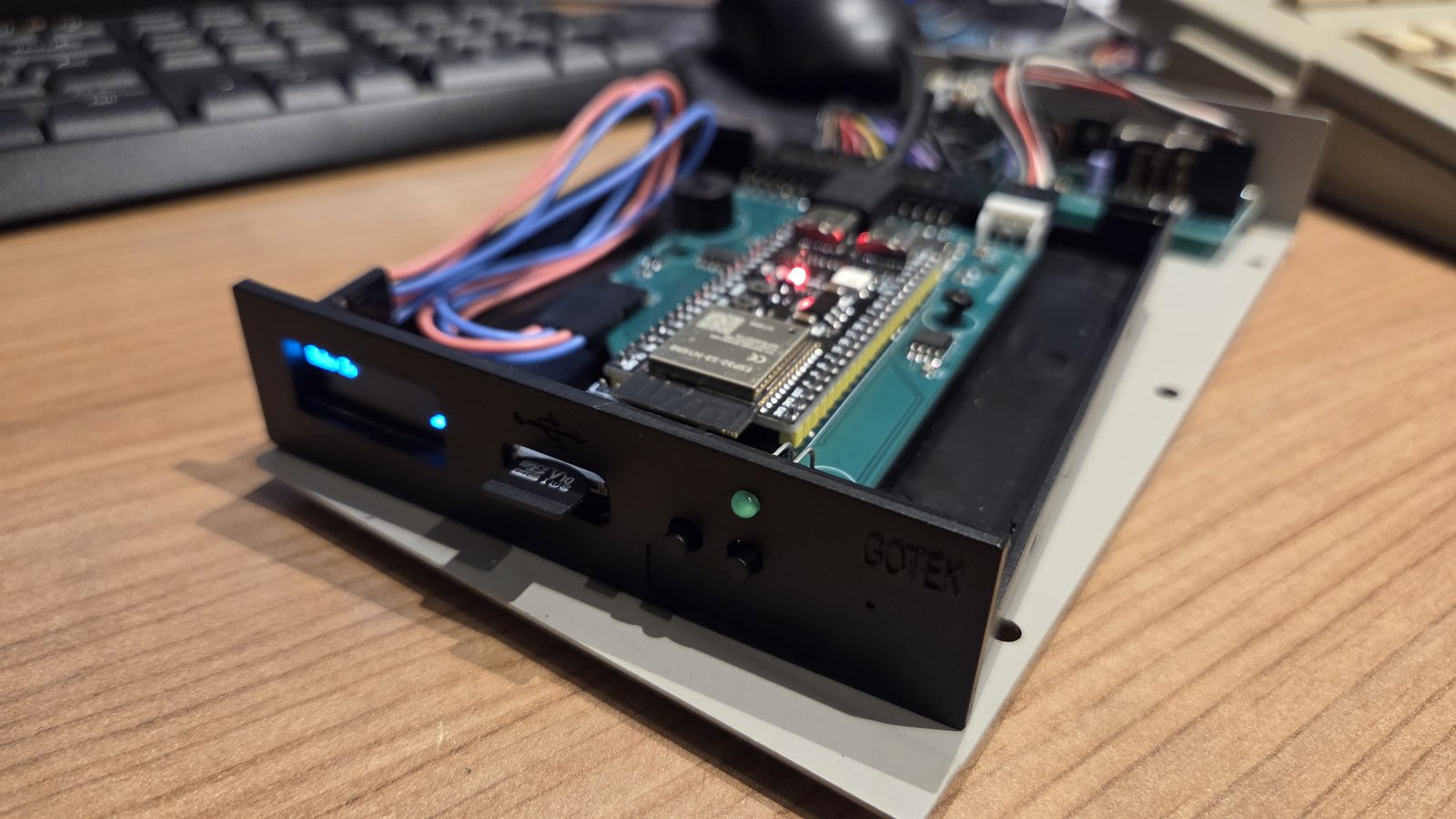
- Emulates a real Shugart floppy drive — flux and INDEX timing are generated directly by the ESP32-S3's RMT peripheral, no FPGA involved
- Plays
.STimages and HFE (v1/v3) disk images straight from a micro SD card - Full write support: changed sectors go into a flash journal first, then get committed to the SD card file — safe even if power drops mid-write
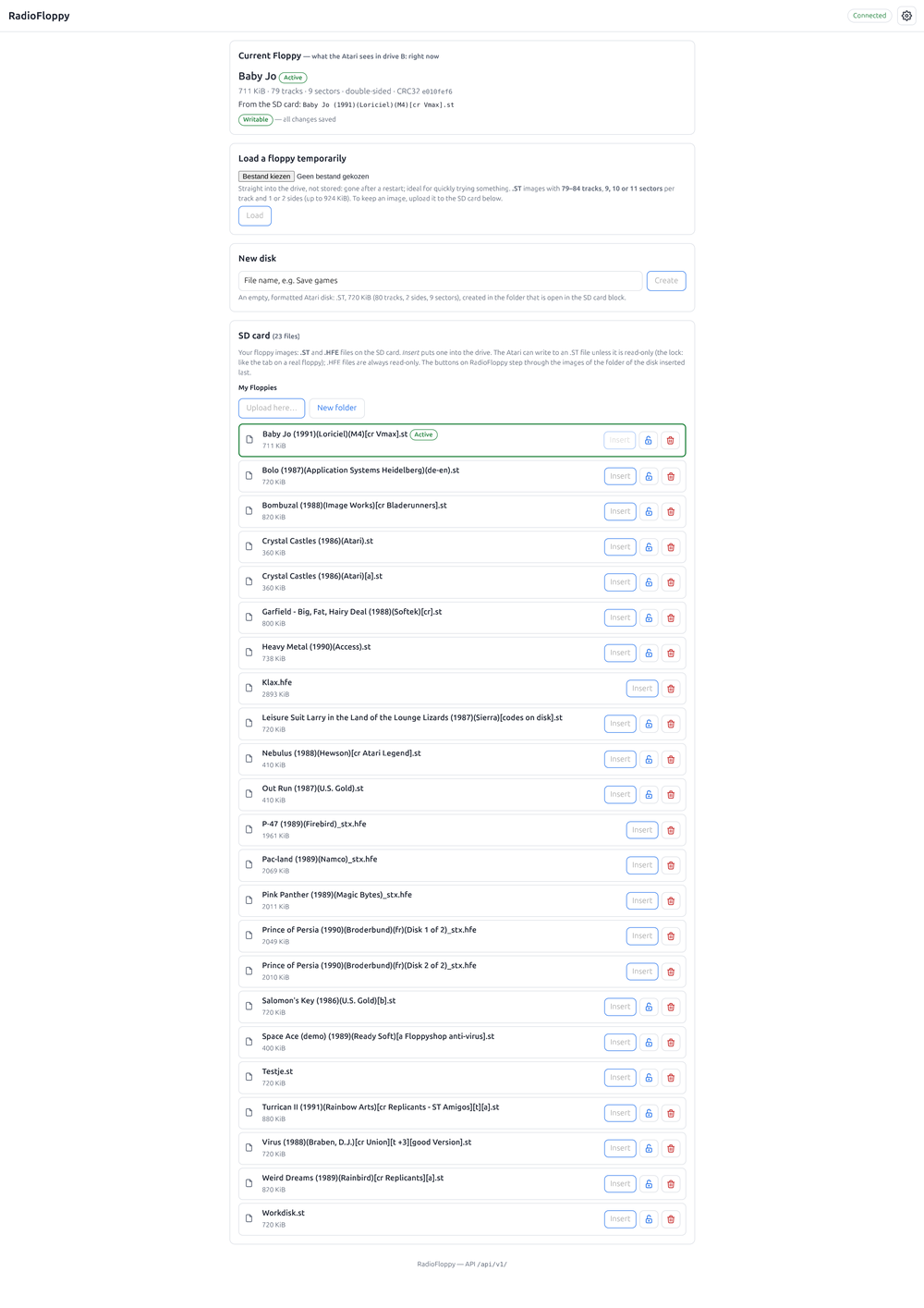
- Built-in web interface (just a browser, no app) to insert images, upload new ones, create blank formatted disks, and manage folders on the SD card
- An HTTP API behind the same interface, for scripting image swaps from anything that can speak HTTP
- Two front-panel buttons step through the images in the last-used folder; hold both for 3s to show the hostname and IP on the display, or 10s to enter WiFi setup mode
- Starts up even without an SD card inserted, from a backup copy of the last disk kept on the board's own flash
- OLED display, status LEDs and a buzzer click on every step pulse, for that familiar floppy-drive feel
Hardware
The current board is PCB revision 2, built around an ESP32-S3-N16R8 module (16MB flash, 8MB PSRAM) on an Otronic DevKitC-style carrier. It fits inside a standard Gotek floppy-emulator enclosure, reusing its OLED window, SD card slot and the two front-panel buttons. Revision 1 boards are retired and no longer supported — nothing new is being built against them.
Web interface
Everything is served by the board itself — open its IP address in a browser and you get the current floppy, a list of everything on the SD card, and controls to insert, upload, lock or delete images, right down to creating a blank formatted disk on the spot.
Status
Firmware for PCB revision 2 has been tested on real hardware: the HFE player, front-panel LEDs, images served from the SD card, and writing through the flash journal all work. Still open: HFE "weak bits" support (phase 3) and one stubborn game (P-47) that still hangs after its copyright screen. Actively developed — no packaged firmware release yet.
Source code, hardware design files (KiCad) and documentation: github.com/RetroLoft/RadioFloppy